A wet morning on the ridge
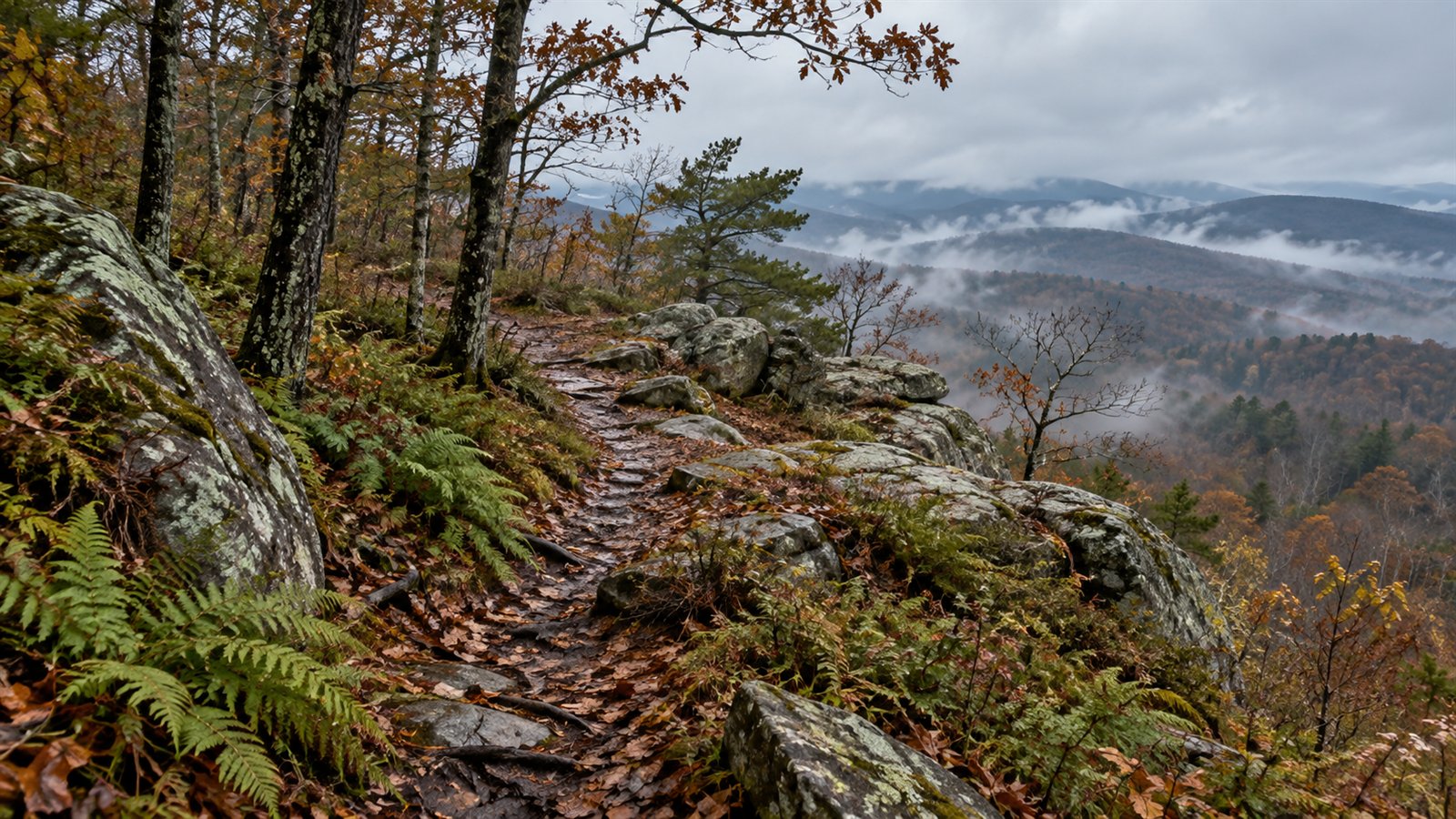
The rain stopped shortly before sunrise, but the woods kept dripping for most of the morning. Water moved through every shallow channel beside the trail, and the first rocky climb was slick enough to slow the pace.
Route notes#
The lower trail crossed mixed hardwood forest before turning uphill through hemlock and white pine. At roughly the halfway point, the path reached an exposed ledge where wind had already dried the rock. Low cloud hid the farther hills, so I turned around at the next junction instead of completing the longer loop.
The approximate route above is enough to show the shape and effort of the outing without publishing a trailhead, campsite, or observation coordinate. For a real post, import a GPX file in Field Review and choose the privacy mode before saving.
Field observations#
- Several red-backed salamanders were active beneath already-loose bark beside the path. I left the bark in place and did not record a precise location.
- Club moss was bright green across the shaded slope, while the exposed ridge vegetation was already dormant.
- Fresh boot widening was visible around two muddy sections. Staying in the center of the tread kept the disturbed area from spreading farther into the understory.
- A small drainage crossing was carrying clear water with no visible sediment plume.
Trail and access conditions#
The first kilometer was broad and gently graded. Beyond the stream crossing, roots, wet slabs, and two short step-ups made the route unsuitable for wheels and potentially difficult for hikers with limited balance. Cell service was intermittent below the ridge. There was no reliable water source after the crossing.
Stewardship note#
One fist-sized branch had fallen across the drainage outlet near the lower switchback. I moved only the loose branch, leaving embedded rocks and the channel itself untouched. The larger muddy section would benefit from assessment by the trail steward rather than an informal reroute.
What I would bring next time#
- Trekking poles for the wet descent
- A small towel for camera gear
- Offline trail information downloaded before leaving
- A few extra minutes to document the widening tread for the local steward
Field journals work best when they record what was actually observed, distinguish estimates from measurements, and reveal no more location detail than the story needs.
Comments require JavaScript.